
Low charge means a leak
AC Refrigerant Leak Help Shreveport LA
Refrigerant is not a consumable. A low charge can result from a leak or an incorrect prior charge, so diagnosing the reason is the difference between a repair and a recurring expense.
Residential requests only. Call 24/7 to check emergency service availability.
Air conditioners operate on a sealed refrigerant charge. Nothing burns it off and nothing uses it up, so a system that is low has lost refrigerant to a leak — at a coil, a fitting, a service valve, or somewhere along the line set.
Homeowners often notice the effects long before anyone says the word leak: gradually weaker cooling across a couple of seasons, longer runtimes, and eventually ice.
Symptoms homeowners report
- Cooling that has slowly gotten worse over one or more seasons
- Ice on the copper lines or indoor coil
- Hissing or bubbling sounds near the indoor unit or line set
- Higher electric bills with no change in habits
- The system was topped off before and is weak again
- Oily residue near fittings, service valves, or the coil
Potential causes
Formicary corrosion in evaporator coils
Tiny pinholes develop in copper tubing over years of exposure to indoor air and certain household chemicals.
Vibration wear at joints and fittings
Years of start-stop vibration can open brazed joints and flare connections.
Line set damage
Physical damage from yard equipment, pests, or settling can nick or crack the tubing.
Service valve or Schrader leaks
Valve cores and caps are small parts that account for a surprising number of slow leaks.
Condenser coil leaks
Outdoor coils face weather, debris, and cleaning chemicals that can erode fin and tube material.
Safe checks you can do first
None of these require opening equipment panels, touching wiring, or handling refrigerant.
- Note when cooling started declining and whether it was gradual or sudden
- Look for oily film or dirt patches clinging to fittings and coil edges
- Listen for hissing at the indoor unit with the system running
- Check whether the insulated copper line frosts over during operation
- Keep records of any past refrigerant additions and dates
- Do not attempt to add refrigerant yourself
When professional diagnosis may be appropriate
- • Any suspicion that charge is low
- • Repeat ice formation
- • A system that has been topped off more than once
- • Visible oil residue at fittings or coil
What a participating provider may inspect
- Charge evaluation using pressures, superheat, and subcooling
- Electronic leak detection, bubble solution, or dye where appropriate
- Coil, line set, and fitting inspection
- Valve core and cap condition
- Repair-versus-component-replacement options with refrigerant type and availability explained
Shreveport-area context
Long Shreveport cooling seasons mean more operating hours, more vibration cycles, and more time for slow leaks to matter. High indoor humidity also makes low-charge symptoms obvious sooner: a coil that cannot hold proper temperature stops removing moisture, and the house feels clammy well before the thermostat number moves.
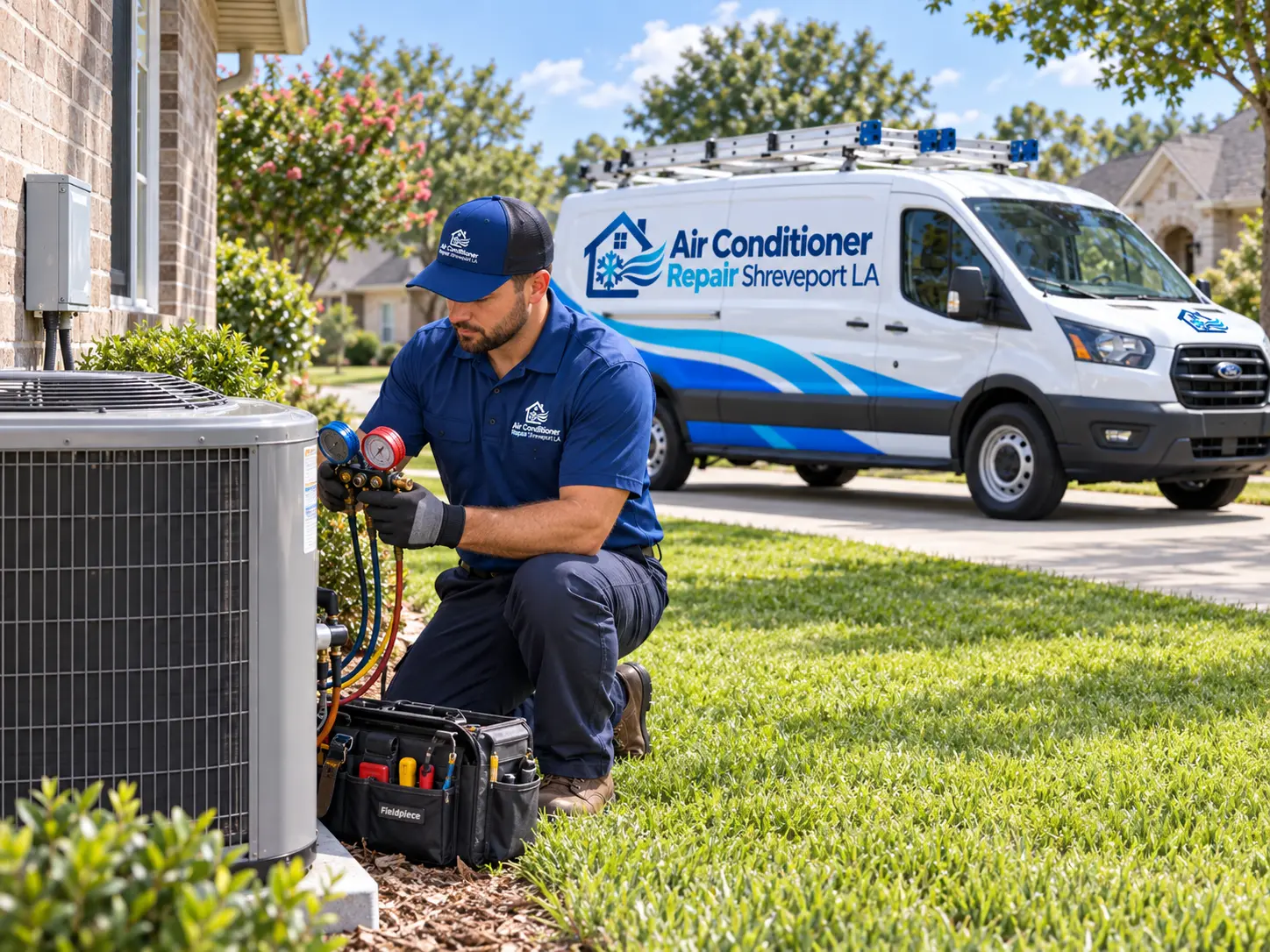
Individuals shown in photographs on this website are actors or models and are not contractors listed on or dispatched by this site.
Same-day and 24/7 emergency service may be available depending on participating provider coverage, location, technician availability, demand, and appointment capacity. Availability is not guaranteed.
Questions homeowners ask
Refrigerant Leak Help questions from Shreveport homeowners
- Why not just add refrigerant every year?
- It treats the symptom while the leak continues, keeps the system operating outside its design range, and adds up quickly. Locating the leak lets you make an informed repair-or-replace decision.
- Is a refrigerant leak dangerous in my home?
- Common residential refrigerants are not intended for occupied-space exposure, and leaks should be handled by qualified providers. If you hear hissing and smell something unusual, turn the system off and ventilate.
- Can every leak be repaired?
- Some can. Accessible fittings and valves are often repairable, while coil leaks sometimes call for coil or system replacement depending on age, refrigerant type, and parts availability.
Keep reading
Homeowner guides that may help
Residential AC requests
Need residential AC help in the Shreveport area?
Call any hour to check current service availability, or send your request online and a participating independent local provider may contact you.
Same-day and 24/7 emergency service may be available depending on participating provider coverage, location, technician availability, demand, and appointment capacity. Availability is not guaranteed.