
A long cooling season means air conditioning carries most of the summer electric load in a Shreveport home. When bills jump, the cause is often more operating hours — from weather, from equipment losing capacity, or from the house needing more cooling than it used to.
Sorting equipment causes from envelope causes keeps you from spending money in the wrong place.
Start with the weather comparison
Before assuming a fault, compare this month to the same month last year. A hotter, more humid stretch raises runtime on a perfectly healthy system, and utility bills often show degree-day information that makes this comparison easier.
Equipment causes
- Low refrigerant charge from a leak, reducing capacity per hour of runtime
- Dirty condenser or evaporator coil raising pressures and runtime
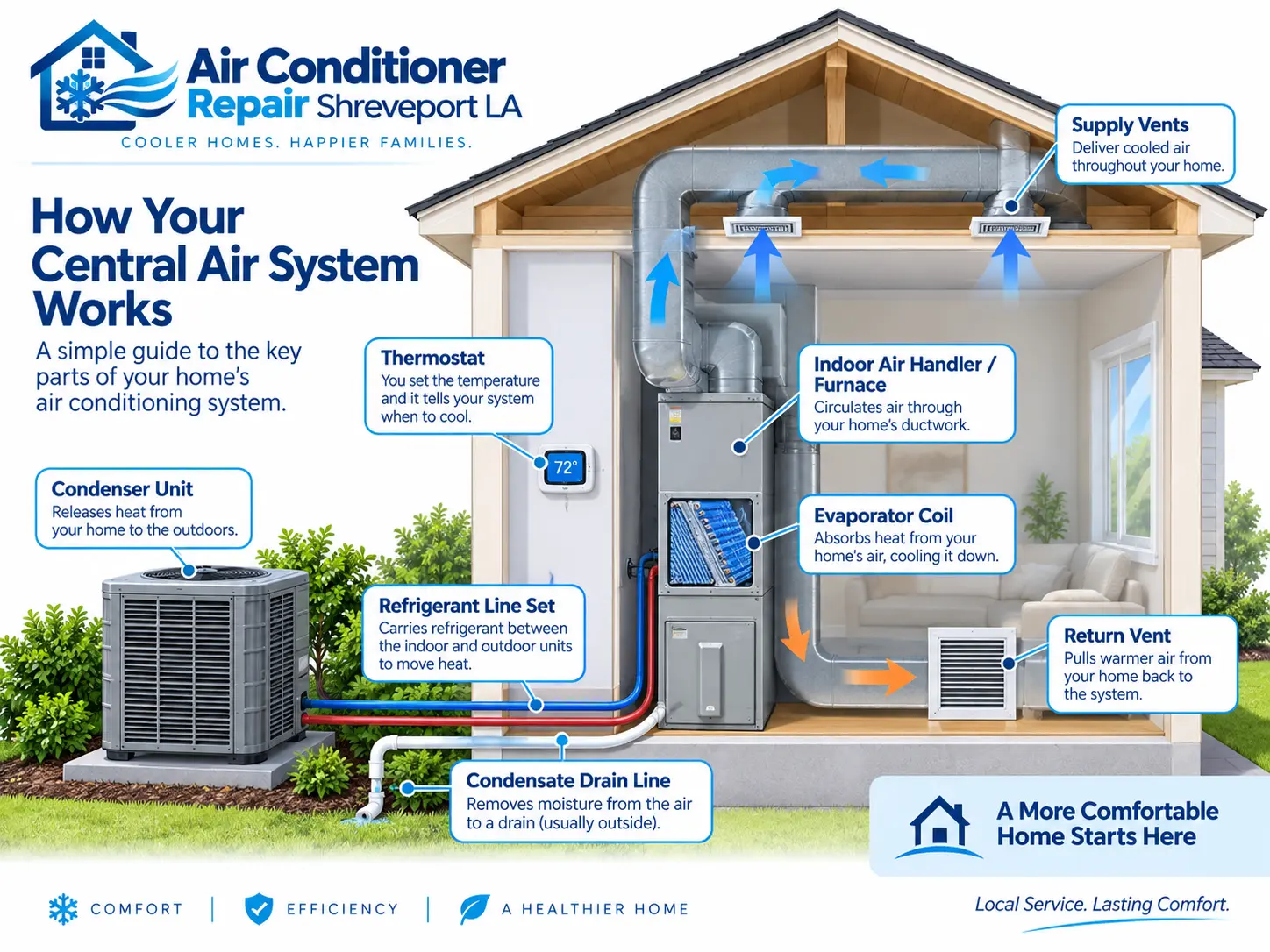
- Restricted airflow from filters, ducts, or a weak blower
- A failing capacitor or motor drawing more current than it should
- Short cycling that wastes energy on repeated startups
- Auxiliary or emergency heat left engaged on a heat pump
Duct causes
Ducts running through a hot attic lose capacity twice: leakage sends cooled air where nobody lives, and heat gain warms what does get delivered. In many homes this is the largest single opportunity.
Envelope and habit causes
- Thin or displaced attic insulation
- Air leakage at attic hatches, can lights, and top plates
- Unshaded west-facing glass during peak afternoon
- Setpoints lowered a few degrees compared with last year
- New appliances, added occupants, or a home office increasing internal load
- Pool pumps, spas, or dehumidifiers added to the same bill
A sensible order of investigation
Check filters and registers, clean the outdoor coil, confirm setpoints and schedules, then have charge and airflow measured. Address ducts and insulation next, because those savings persist regardless of which equipment you own later.
Individuals shown in photographs on this website are actors or models and are not contractors listed on or dispatched by this site.