
Most of what keeps a residential cooling system healthy in this climate is unglamorous: fresh filters, a clean outdoor coil, a clear condensate drain, and open registers. None of it requires tools or training.
The rest — charge verification, electrical testing, coil cleaning, and airflow measurement — belongs to a qualified provider with instruments.
Monthly during cooling season
- Check the filter and replace it when it looks loaded, not on a fixed date
- Walk past the outdoor unit and clear grass, leaves, and debris
- Confirm the condensate drain drips outside on humid afternoons
- Glance at the drain pan under an attic or closet air handler
Before the first hot stretch
- Gently clear loose debris from around the outdoor unit with the system switched off, following manufacturer guidance
- Trim vegetation back at least two feet from the cabinet
- Run the system in cooling for 20 to 30 minutes and note vent temperature and airflow
- Replace thermostat batteries
- Schedule professional service ahead of demand season
Through the season
- Keep all supply registers open and return grilles unobstructed
- Track indoor humidity with a hygrometer
- After storms, verify the thermostat kept its settings and the breaker is set
- Note any new sound, smell, or performance change while it is still small
Leave these to a provider
Anything involving refrigerant, electrical panels, capacitors, coil chemical cleaning, blower removal, or duct modification requires training, instruments, and in some cases certification.
What professional service typically covers
- Charge verification with pressures, superheat, and subcooling
- Capacitor, contactor, and amp-draw testing
- Coil cleaning on both sides as needed
- Condensate drain clearing and safety switch testing
- Static pressure and blower performance evaluation
- Thermostat operation and cycle behavior review
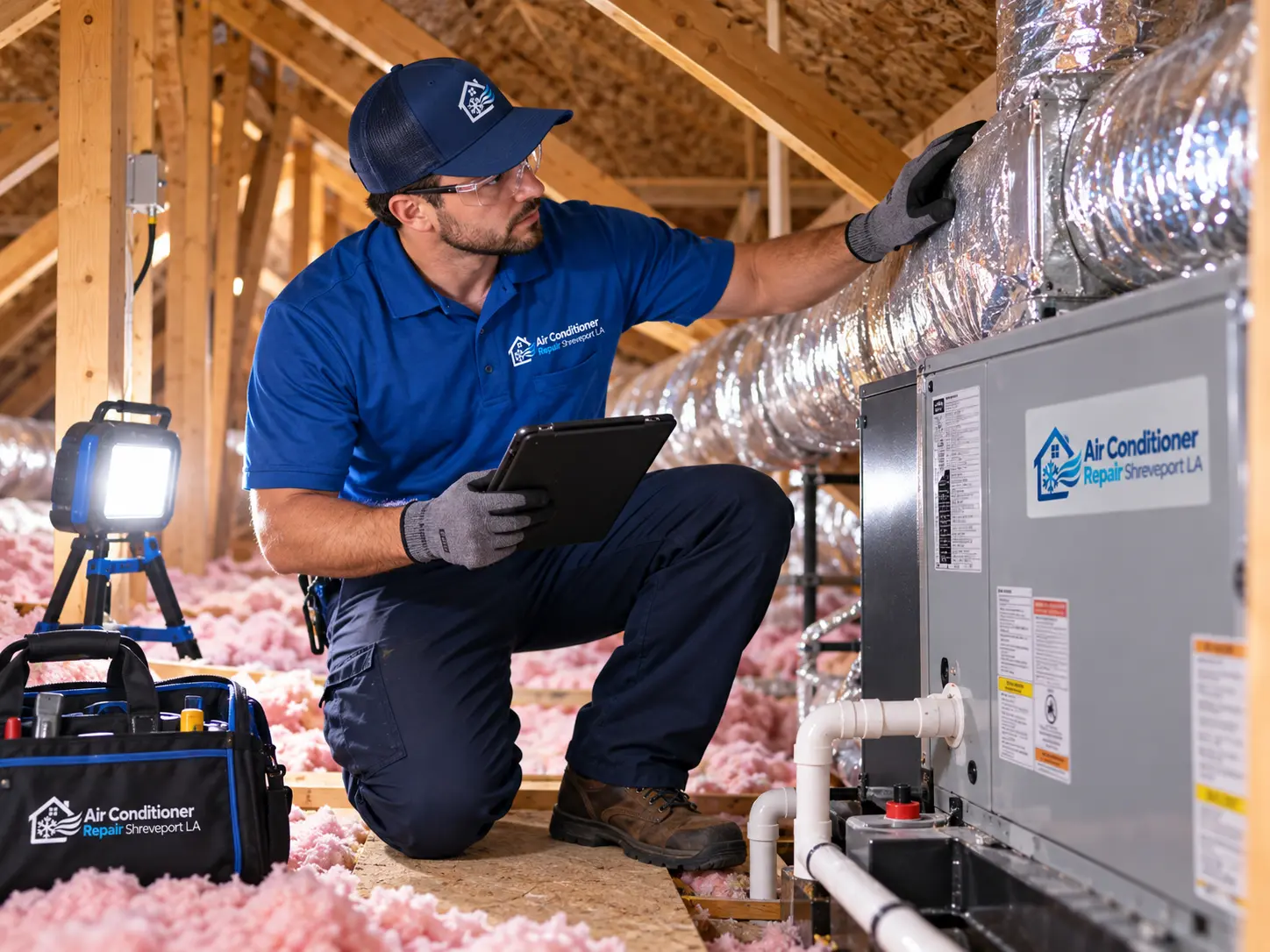
Individuals shown in photographs on this website are actors or models and are not contractors listed on or dispatched by this site.