
In Northwest Louisiana a large share of the work your air conditioner does is moisture removal. Air passing over a cold coil gives up water, which drains away. That process needs runtime and correct airflow, and when either is off the house can hit its temperature target while still feeling clammy.
This guide covers what drives indoor humidity and which parts of it a homeowner can influence.
What comfortable humidity looks like
Many households find the 45 to 55 percent range comfortable indoors. An inexpensive hygrometer is worth having, because it turns a vague complaint into a number you can report and track.
Short cycling and oversizing
An oversized system reaches the thermostat setting quickly and shuts off before much moisture has been removed. The result is a cold, damp house. This is one of the most common humidity causes in homes where the equipment was sized by matching whatever was there before.
Airflow set too high
Blower airflow that is too high for the coil keeps the coil warmer than ideal, reducing moisture removal. It is adjustable on most equipment, and it is worth asking about when humidity is the complaint.
Drainage and coil condition
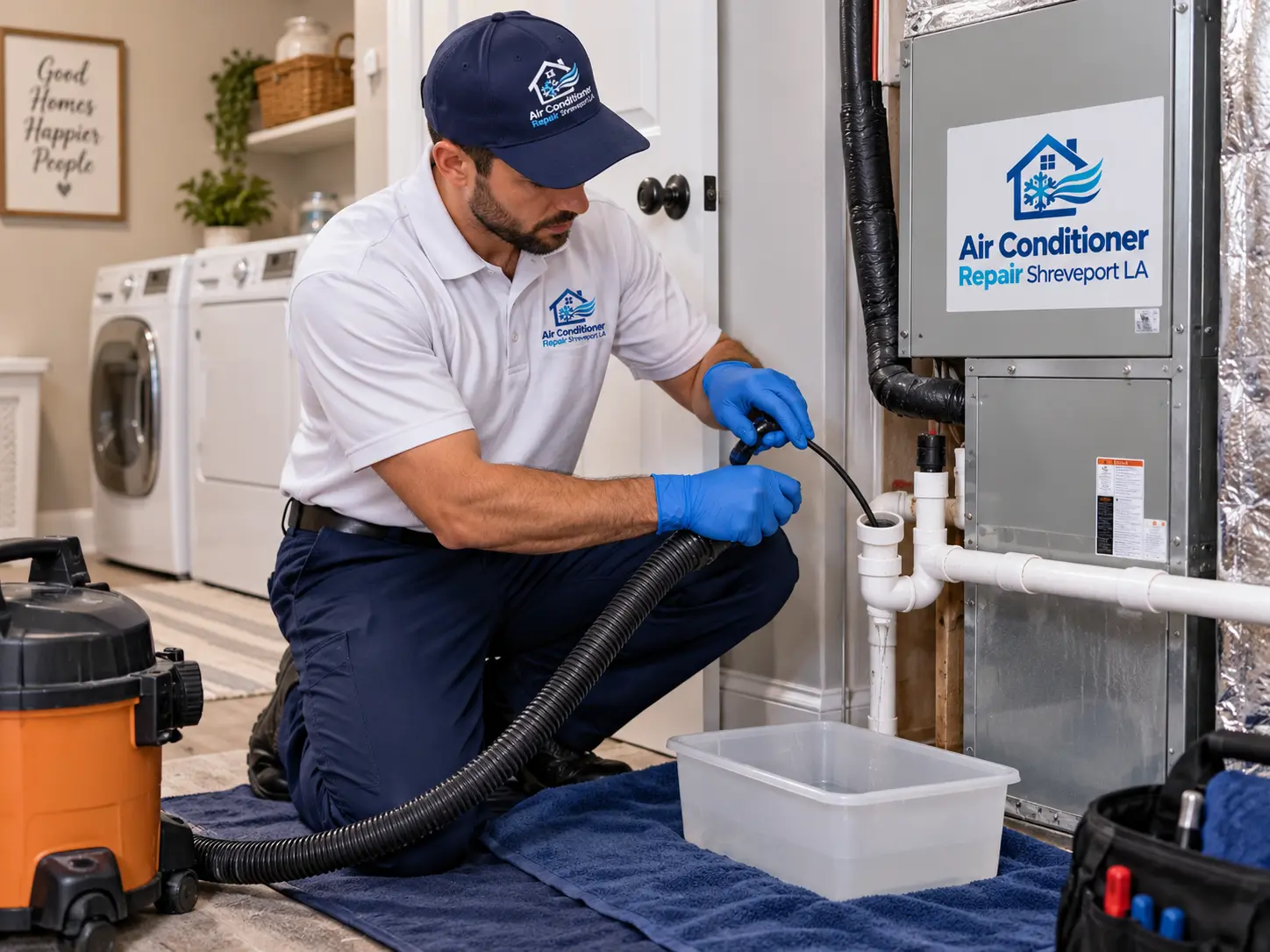
A partially blocked drain, a sagging line, or a coil coated in grime interferes with removing the water the system condenses. A musty smell at the vents often accompanies this.
Outside air and household sources
Leaky ducts pulling humid attic air, an unbalanced ventilation setup, open crawl spaces, long showers without exhaust fans, and unvented laundry all add moisture load.
- Run bathroom exhaust fans during and after showers
- Vent the clothes dryer to the outdoors
- Keep crawl space vapor barriers intact where present
- Avoid running whole-house fans during humid weather
What a provider can measure
Temperature split, static pressure, blower airflow, refrigerant charge, coil condition, drain function, and cycle length together explain nearly every humidity complaint. Ask for the numbers, not just a conclusion.
Individuals shown in photographs on this website are actors or models and are not contractors listed on or dispatched by this site.